
How to Believe When You Are a Teenage Scientist
My 12-year-old niece wondered how she could find a spirituality that would satisfy her scientific mind. I decided to do my best to answer that for her… and recruited my husband and parents to do the same. So, here are four educated people’s take on how to meld science and spirituality. Although this was written for my niece, I think many will find something to take away from each perspective. I have included this under my “Grief” category because grief often leads people on a spiritual search for something more. The answers to the questions become more important when some of those you love are in the spirit world. I hope this helps someone.
Introduction
Throughout our lives, we go through different stages of spiritual growth. When we first start out, we are very sure of our beliefs about the world:
- Facts
- Us vs. Them
- Good vs. Evil.
As we start to be ready for a new stage, either because of our brain development or because our experiences cause us to think harder about the world, we start to become uneasy in the stage we are in. We miss the comfort of being so certain about reality. At the same time, we start looking for something more, without really knowing what that something more could be… if it even exists. We look to people at later spiritual stages than we are in, but a lot of their answers seem obscure; Wishy washy; Based on something that we can’t relate to. It’s an uncomfortable, sort of lost feeling to search for the answers that will bring us to our next stage. I get the sense that you feel your analytical mind may hold you back from discovering a spirituality you can be satisfied with, but I think it is just the opposite. I have a very analytical mind, as well. When I went on my spiritual quest to reconnect with Jake, I decided to consult as many sources for information as I could, keeping an open mind while talking to people, then using my critical analysis to decide which parts of other people’s truths I accepted, and which would not work for me. It was sort of like being an anthropologist, studying a new culture, then analyzing it through my own lens. Some people may feel their spirituality more intuitively. People like us may prefer to study and hunt after a hypothesis. Both are legitimate spiritual paths. So, congratulations on this new stage, my little anthropologist! And good luck!
Jacqui’s Perspective
Perception vs Reality
Seeing is believing, right? We use our senses to figure out what’s out there in the world. But scientists actually know that what we see is not all of reality. Donald Hoffman, professor of Cognitive Sciences at UC Irvine, wanted to find out the probability that natural selection would lead to us evolve sensory systems that could actually see the true reality. After many advanced simulations, he and his colleagues concluded that the probability was… virtually zero. What we are seeing is what we have needed to see to stay alive long enough to reproduce. Vampire bats can see infrared to help them hunt at night. Butterflies can see ultraviolet light to pick healthy mates. We haven’t needed that. How many other things have we not needed and thus, can’t sense? Like, it wouldn’t have helped us survive to be able to see that matter is not actually solid, but is made up of many small atoms.
Hoffman believes our senses actually hide reality because the truth is too complicated. When you use your laptop to write an email, what you’re doing is toggling voltages on millions of transistors. But no one would write emails if we had to fiddle with voltages to do it. The reason we have a computer interface is to hide all the complications and allow us to interact efficiently. Our senses are our interface. Even looking at neurons firing in our brain could just be like looking at the icons on your desktop. They’re related to thinking, but likely not the whole story.
And this is just the small segment of reality that we can’t sense, but know is there. Imagine how much of reality we may not even have the knowledge and equipment to be aware of at all?
My Theology
Growing up with a physicist father, we had lots of interesting discussions after church. My dad used to say, “Wouldn’t it be crazy if birds fell out of the sky every time God lost concentration? Wouldn’t it make more sense for God to create physics and then let the universe run itself?” Or, “Sure, the universe may have started with the Big Bang, but who started the Big Bang?” Those were interesting ways to meld my ideas of physics and religion, in a context of already believing that God existed.
After Jake died, I questioned a lot of my previous beliefs. No part of ancient scriptures, written by ancient men and curated by medieval men was going to give me the truths I was looking for. I had a scientific mind and I wanted current evidence for the existence of an afterlife. After all, your mother will tell you, science is not a list of facts about the universe. It is a systematic way of studying the phenomena in the universe. People used to think that the human mind could not be studied scientifically. They called it a “black box.” But psychologists figured out ways to systematically study it. Psychology is now a science. Why couldn’t we figure out a way to do the same for the spirit realm?
It turned out, I wasn’t the only one who had thought this. A medical doctor named Jeffrey Long started the Near Death Experience Research Foundation and has written two books, summarizing his findings. The first one is called “Evidence of the Afterlife.” This was the first time I felt that someone, talking about the afterlife, was actually speaking my language.
This foundation has collected 5200 Near Death Experience (NDE) stories from all over the world and in different languages. Long studied these experiences cross-culturally and in adults and children to control for expectations and beliefs. He found that people had similar experiences no matter what they previously believed (even atheists). The themes included: Out of body experiences, going through a tunnel with a light at the end, extra perceptions they never had in life (e.g. seeing 360 degrees around them or colours they couldn’t have previously seen on earth), a sense of all encompassing love and connection, and often meeting a family member who had already died, and sometimes God. Each chapter brought up an argument people use to say NDEs are not real (e.g. it’s the dying brain being deprived of oxygen) and then a rebuttal for why that couldn’t be the explanation (e.g. because people deprived of oxygen are very confused and people felt very clear during these experiences, or the fact that people who are hallucinating would be more likely to see people they see every day, or think about often, but these people always saw loved ones who had already died, some of whom they hadn’t thought of in years). Some of the individual stories were very convincing as well. Like, a little girl who never knew she had an older sister who had died, but met her in the near-death experience. Or a person who could tell the surgeon that his pen dropped out during surgery and rolled to one side of the room (seen in an out of body experience) or someone who knew there was a shoe on the roof of the hospital that there was no way to see from anywhere but above it (as they rose up toward the tunnel). When people come back from these experiences, they say it is the most real thing they have ever experienced and they are forever changed by it. I think your mom has the book. It’s worth a read.
God
Many people don’t even like using the word “God” to describe the being they meet during their NDE. They say that our idea of God does not come close to what God actually is. That God is so much more than the man in the clouds we see in paintings. They just use the word because we have no better word for it. They describe God as actually being made of everything and everyone, but also having a consciousness of It’s own. I like to think of our souls as the separate neurons in God’s brain. We think we are separate, but we are actually part of a whole. I’m sure it’s much more complicated than that, but that’s my little way of thinking of it. People who meet God feel loved, accepted, and, understood in a way they have never experienced before. Now, I believe this cognitively, but never having met God, I do not feel an emotional connection to God. I pray, usually when I need comfort, but I also struggle with my relationship with God, since Jake’s death. I reconcile this by loving nature, loving my family and showing love to friends and strangers alike. If they are all a part of God, then great. I’m loving God. If they are not, well, I’m doing good in this world. In the end, it doesn’t really matter why I’m showing love. The ripple effect will happen, no matter the reason. This is all I am capable of right now and I’m sure God understands this and isn’t bothered.
What do Near Death Experiences say about the Universe?
NDEers say that the universe is all made up of “God’s Love Energy.” They say that doesn’t really describe it, but LOVE and ENERGY are best they can come up with, using our limited human language. This doesn’t necessarily conflict with science. We know that things aren’t actually solid. We know that if you go small enough, it’s all made of energy. Maybe God did create the universe out of God’s self. Maybe the Universe is all made up of a certain kind of energy that came from a single source and is still all connected somehow. And some people call that God. Who knows? I don’t spend a lot of time trying to figure out the underlying forces of the universe. It’s like staring up at the sky on a really starry night. My mind can’t fully grasp the vastness of space. If my thoughts go too big or too small for too long, my brain can’t really process it and I finally have to let the idea go.
Conclusion
Your mother [a psychologist] once told me that before I started my spiritual journey, she thought that if something couldn’t be demonstrated in a randomized control trial, it wasn’t really worth her time to think about. After Jake died, she realized that there was a whole area of life that could not be studied in that way; Like the nature of the love-bonds that cannot be broken, even by death. And for that area of life, lived-experience and intuition have a place (Although I’m betting that if your mom and I put our heads together, we could come up with a way to study it. In fact, we already have some ideas). I’m not sure you can really get behind an idea like the intuition of lived experience though, until you have… well, lived it. Be that as it may, there have been many scientific minds throughout history who have had deeply held spiritual beliefs. I’m betting it took each of them a lot of analysis, discussion, and contemplation to get there. I have every confidence that you can do the same. After all, you never have to be sure and you never have to be done. It is enough to try.
Rich’s Perspective
The More You Know
I was a staunch atheist when I was your age and I thought anyone who believed in God was dumb, and anyone who thought God made sense just hadn’t thought about it enough. I have grown so much since then and re-evaluated my own beliefs as well. I’ve actually been thinking about this a lot lately. People often shy away from the term God. For them, it’s something absolute that people either believe or don’t believe in. I have concluded that God is a term that people use for things they can’t explain, and there is a lot of that. When I started studying science, I thought it could teach me everything about the world, but the more I learned, the more it left me wanting. The more you dig, the more you realize, we really don’t know… anything… at all. Take the double slit experiment. Electrons will behave like waves until you try to observe them, and then they behave like particles. No one knows why.
Fantastically Ordered Patterns
Then there are these incredible patterns in the universe. A study in 2019 found that the structure of galaxies, if you include dark matter and dark energy, looks like the structure of neurons in the human brain.
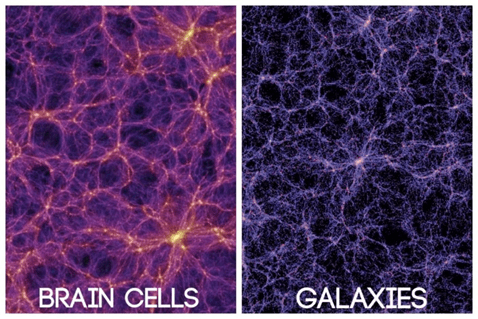
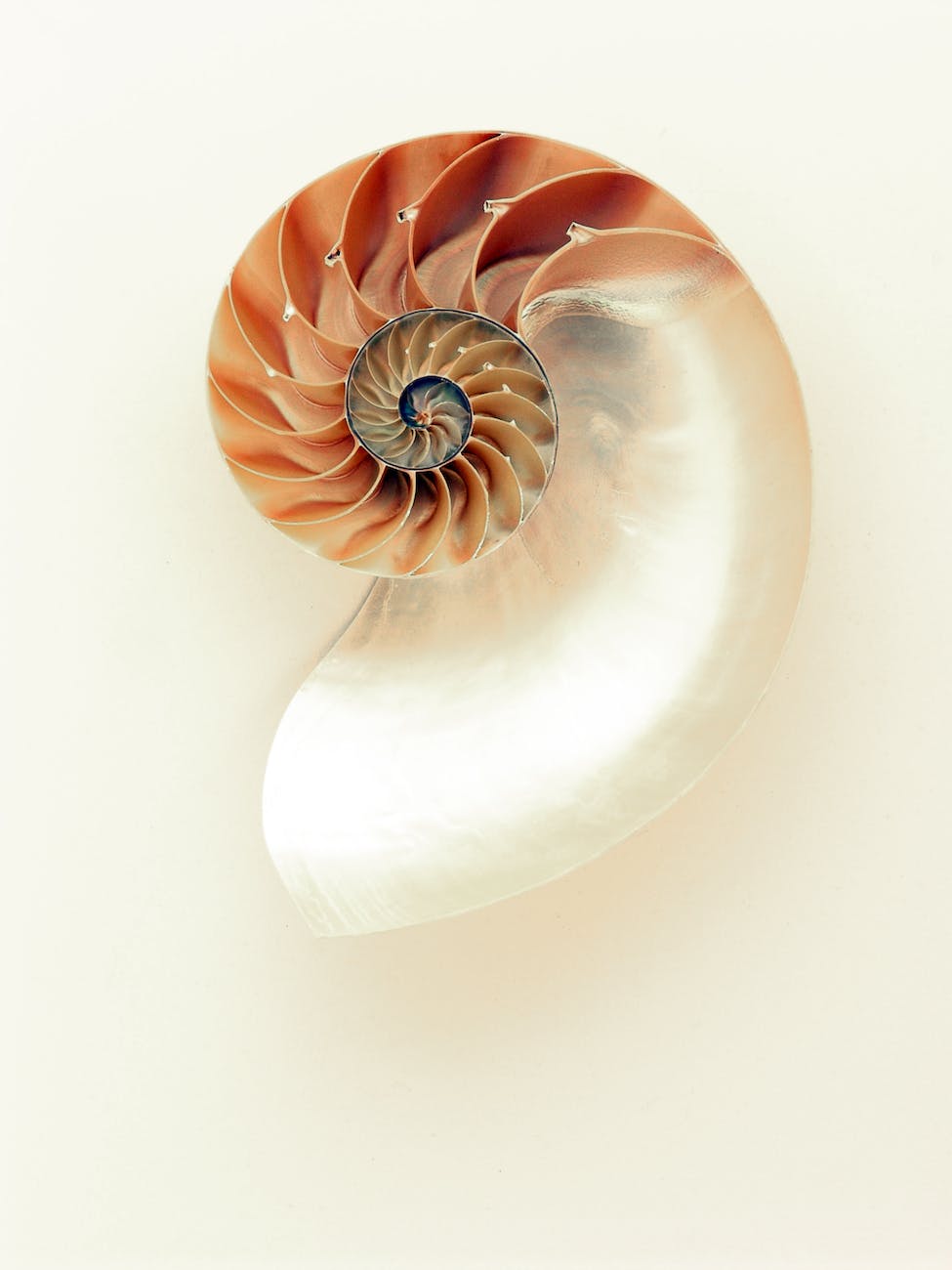
And nature is full of fractal patterns. Some argue that we only see these patterns because the human brain is geared to see patterns, but mathematicians can actually categorize these patterns. Such ordered patterns in nature leaves one in awe, almost no matter what you believe the cause is.

Proving Reality
Great philosophers have argued about how to prove anything we are experiencing is even real. How can you prove that this reality is not just an illusion? How do you know YOU are even real? One great philosopher, Descartes, concluded, “I think, therefore, I am.” The only thing you can ever prove, is that YOU exist. Because you can feel yourself thinking. Everything else could be a big illusion. Science is a way of studying the world around us, but some questions go beyond what science can do for us, into the realms of philosophy and spirituality.
Redefining Spirituality
People think about spirituality as being about religion. But the Scouts Canada definition is the feeling of connection to something bigger than yourself. Think of people across the world and what they are experiencing. Look up at the sky and realize that there is so much more than your experience. Even just by thinking about it, that brings some connection to it. And that is spirituality – whether or not you actually believe in God.
Grandma’s Perspective
Thank my darling girl for opening up a family discussion on my favourite topic-
Spirit/God!!!
I come from a Science background, having studied physics, math, chemistry and biology in high school, followed by a Bachelor of Science in Physiotherapy at Queen’s U. (My favourite subject was Psychology!!)
Churches, unfortunately, have evolved from philosophies that do not resonate with thoughtful people of today. Theology puts us off- based on 2000 year old Greek philosophy, and then later by the medieval Catholic church. That vocabulary is such an obstacle!!!! When I taught Sunday School years ago, I told the kids that I thought the Bible was boring!!! Who could understand it? But- I was REALLY attracted to Jesus for healing the sick people. I wanted to do that!
My family went to church every Sunday- it was a tradition, a family thing.
When I was your age, I had a dream. In my dream, Jesus was tied up to a post, and we kids walked a circle around Jesus, jeering and flinging cans of paint at him. We were doing our best to humiliate him. When it was my turn to hurl yellow paint over Jesus, he raised his head to look deep into my eyes. I braced myself for his accusations of what a bad thing I was doing. Instead, he looked deeply right into my innermost soul with all of the love of the universe and held my gaze for timeless moments. In the dream I was so stunned by this outpouring of love that my paint can dropped to the ground. All I felt was pure awe and love.
Well, I have carried that all my life! I have felt the love of…. Jesus? God? The Source? Spirit? I can’t unfeel it, Julie. So I carried it around inside me, and eventually went back to university for a Masters of Spiritual Care.
As for healing… Back when I worked as a physiotherapist at Scarborough General Hospital, my job was to help patients who just had surgery to their chests or abdomens to take deep breaths, cough, sit up, stand up, walk a few steps…Painful!!!! As I placed my hands on the patient, I tried with all my might to send healing energy and love to the patient. I used the Physiotherapy techniques based on Scientific studies, but I was asking God/Spirit/ Loving Energy to please help this patient. The patients and their nurses were so grateful to see the patients happily moving about with me. Another time I walked into a patient’s room and she exclaimed, “What just happened? I can feel your love?” She was so happy! You see, I always checked in with God/ Spirit/ Healer before I entered a patient’s room.
Sweet, sparkling girl, as Jacqui said, it’s a lifetime journey! Congratulations for taking the first step! Love Forever, Grandma
Grandpa’s Perspective
Jacqui tells me you are doing some serious wondering about how a scientist or at least a science-oriented person accommodates spirituality in his or her life. Unlike Jacqui and your grandmother and so many others, I have never studied the subject like or as an academic. However, I have thought about it and been a party to many discussions over the years with friends and family. I have also sat through many, many sermons including some in the Roman Catholic Church, Anglican Church and a Jewish Synagogue. My conceptions are very much influenced by my science and engineering training and mindset. Here are my thoughts.
Questions
How do we come to grips with the notion of God? Some people think their way to God. Others feel their way to God. I have never had an inspirational religious or spiritual experience (that I recognized as such) so I am left with thinking about it. The scientific method starts by asking questions. In my experience, the specific questions we ask and how we ask them change over our lifetimes, often in response to the challenges we face from time to time.
Some of my favourite questions are
- Is there a God?
- What is God? Is God all-knowing; all-powerful?
- Given all the pain and suffering and evil in the world, how could an all-knowing and all-powerful God let it happen?
- If God is not all powerful, is God at least all knowing? If so, what good is God to us?
- Does prayer work? Can we coax God into acting for the good of us or our loved-ones?
- Is there an afterlife? Does what we do in this life affect our fate in the afterlife? (Is there a heaven and hell?
- Does believing in God make our lives better (whether God exists or not!)?
- Is organized religion a good thing? Should I join an organized religion?
What and how we learn about God in our early years are not expected to hold us throughout our entire lives. We are not equipped as children to grasp complicated theories. This is true of the study of science, too. One of the annoying things about learning physics in high school is that it seems that every year we learn a new and more complicated theory of the atom and molecular interactions. They even make us learn how scientists from Greece pictured the atom 2500 years ago. As a physics teacher, I came to understand why. We need a deep understanding of physics to grasp quantum-mechanical physics concepts. The simpler (and older) models give us a practical understanding of the nature of matter sufficient to our needs in classical physics and basic chemistry without having to have the advanced mathematics needed to work with the new theories.
Likewise, our parents and ministers provided us with simple theologies (religious belief systems) when we are young. We need the higher brain power that comes with maturity to cope with more complex concepts. It can be no less unsettling to learn about new theological concepts than it is to learn new physics concepts – although there is a lot less math involved.
Conceptions of God
My childhood friend, Doug, did not believe in God or an afterlife. He used to say that his greatest disappointment with his belief system was that he did not expect to have consciousness after death and therefore wouldn’t be able to say, “I told you so!” Doug’s world had no need for our classic Father-in-Heaven notion of God. I’m pretty sure he absorbed his a-theology from his father (an engineer). Apparently, his family had found no need for organized religion in their lives.
My mother was brought up in a time and place where belief in God was ingrained in the culture. Mom stopped believing in God when her husband died. In her mind, God had let her down, and she had no time for God anymore.
My friend and early career mentor, Lloyd, was devastated by his unexpected divorce and seeing his young son raised to believe another man was the boy’s father. Like Jacqui, Lloyd spent years exploring religions and philosophies, looking to understand a universe that would do such a thing to him. He found what he needed to embrace his new relationship with his son in Eastern philosophies and religions, especially Bhuddism.
What I learned as a boy in Sunday school was that God was watching over us. Here are a couple of lines from one of our hymns:
“God sees the little sparrow fall, it meets his tender view. If God so loves the little birds, I know He loves me, too.”
The message is that God loves us. There is no implication that God would intervene to save the bird! The conception of God in this case is like a loving parent. Our parents cannot keep us from all harm. Life is a risky endeavour. When we get out of bed, we face risks to our well-being. The risks are there even if we don’t get out of bed. Our bodies need to move and our minds need to explore the world around us. Our parents cannot follow us around trying to keep us from harm the way they did when we were learning to walk. Neither can God hover over us to keep us from every scrape or injury or insult. We would not learn to avoid the risks to life and limb if we never experienced minor scrapes. If God really were watching what’s going on, God would figure out pretty quickly that God cannot be constantly intervening in everything we do. Our desire for free will would build resentment for a God who was acting like-helicopter parents.
So where do we get the idea that God can and maybe should intervene? Well, from stories of Jesus. Jesus drew crowds because he could heal people. He cured physical and mental illnesses and even brought a person back from death. So, people came for the healing and stayed for the message. If the healing came from God, then the message must do so as well. And what was the message? In one way, it boils down to the Golden Rule, “Do unto others as you would have them do unto you”: Love each other as you love yourself; forgive the wrongs people do you; have mercy on those less fortunate. That way, you have a chance to be loved, forgiven and shown mercy from others.
Jesus also said there was an afterlife. You can get there by living as Jesus (therefore God) described. By living in love and forgiveness and mercy, you don’t have to wait for the afterlife, you can have God’s Kingdom on Earth.
Jesus can be seen as God’s great, but soft, intervention. God cannot act directly to control our actions or even to prevent bad things from happening, but God can teach – by example through Jesus. Of course, Jesus is not the only messenger/teacher of God. The Bible is full of other prophets: inspired people who tell people how to live a better life. Other religions and philosophies have their own prophets and similar messages. (The Golden Rule shows up all over the place.)
Is Jesus a God? A demi-god, i.e., the son of God? Theologians argued about this for centuries until a conference of religious leaders decided that the debate was not good for the religious organization and by majority vote decided Jesus and God and The Holy Spirit were three parts of one God! Does it even matter if Jesus is divine or just inspired. His message is just as powerful!
The Holy Spirit is seen differently by different faiths. What resonates with me is the idea that God is in Heaven, Jesus came to be with us as a one-time event, but the Holy Spirit is a constant presence in our world. The Holy Spirit has been interpreted as a “Divine Spark” within us that brings out our better nature – what motivates our love, forgiveness and mercy. With this idea in mind, we can see God’s work all around us in the acts of those who aid others in their time of need, like health care workers, fire fighters, food bank volunteers, neighbours who bring you food when you are sick, and people who reach out to strangers in need – the good Samaritans described in Jesus’s parable.
Does Prayer Work?
It is clear that some people (often referred to as Fundamentalists) believe that God is an active presence in their lives. They thank God that they scored the winning touchdown in a major league football game. Others claim that their loved one survived a life-threatening event because people prayed for their salvation. I find it hard to buy the idea of a transactional God: we pray and he delivers; that any good thing in our lives is due to God’s influence. The problem is the flip side – do we blame God for all the bad thing that happen in our lives? If God does not answer our prayers does that mean we haven’t had enough people praying or that we have not prayed hard enough? Do we then forsake God when God (apparently) forsakes us?
Does prayer work? There is evidence that regular prayer has the same benefits for our well-being that come from meditation and mindfulness: better sleep, calmer emotions, greater self-awareness, increased resiliency and reduced stress levels. As the old adage goes, “Misery loves company.” When our grief is shared with others, it helps us cope. Prayer can provide comfort by providing “someone” to talk to and someone we believe will accept us unconditionally.
Is There an Afterlife?
The Bible says Jesus says so. Also, all the religions I know about (throughout history) have some concept of a life after death and that being a good human being in this life is a way to a better afterlife. Can all those people be wrong? There is no incontrovertible proof of an afterlife, and yet, there is a fair bit of suggestive evidence, much of it derived from dreams, visions and near-death experiences. Jacqui can tell you all about near death experiences.
Is there a benefit to society of having people believe in an afterlife? It may provide us with some extra incentive to love our neighbour, forgive our trespasses and show mercy to the oppressed if doing so gets us a better spot in the afterlife. For some religions this is a serious issue. It certainly used to be for Christianity. There is also the comfort that can be provided to those who have lost a loved one – the hope that we may be reunited in the afterlife. And there is the comfort that can be provided to those facing their own imminent demise.
Is Organized Religion a Good Thing?
Another related issue for me is that of organized religion. There are many, many organized religions in the world. The questions I ask myself are, “Which, if any, organized religion should I associate myself with? Are their belief systems consistent with my ideas and do they present ideas and faith concepts that resonate with my values and beliefs. I have found the United Church of Canada works for me.
Conclusions
Scientists propose theories (we actually call them hypotheses until we test them) to explain what is going on around them in the universe. We want our explanations to be plausible (reasonable or believable). We also look for the simplest theory that explains what we observe. Finally, we like our theories to be testable. We do not reject hypotheses out of hand just because they cannot be tested, but we remain unconvinced.
When quantum physics was conceived of, many physicists just refused to accept that it described the universe, despite the test results. Albert Einstein, the most brilliant physicist of his age, was one of them. No one who understands quantum physics likes it. We just want there to be something better: something that does not have so much built in uncertainty (there is, ironically, a well-defined Uncertainty Principle) and has to be described using probability. (Early on, Einstein insisted that “God does not play dice.”)
Spiritual matters have a large dose of uncertainty. Our understanding of things spiritual does not, so far, lend itself to laboratory testing. But we can take advantage of the conclusions of great thinkers over many centuries, add them to our own lived experience and decide what makes sense to us in terms of providing guidance on how to live a good life.
Visit the Jacob Hillerby Memorial Bursary at Renison College by Clicking Here.
Get Jacquify delivered to your inbox.
Web Design by LMG, email
 jacquify.com